AI magician: the future of magic and artificial intelligence
How Artificial Intelligence Is Rewriting the Oldest Art Form on Earth
One of my favourite quotes comes from Arthur C. Clarke, who wrote in his 1962 essay collection Profiles of the Future: “Any sufficiently advanced technology is indistinguishable from magic.” That single sentence captures something magicians have always known instinctively. Magic and technology are not opposites. They are dance partners, and they always have been.
I’m Isma Zmerli. I’m an AI magician, a mentalist who fuses artificial intelligence with live illusion to create performances that feel genuinely impossible. I hold a Master’s in Cognitive Science from École Normale Supérieure (ENS Ulm), and I’ve built my career at the intersection of human cognition and machine intelligence. Since 2024, I’ve been performing AI-driven magic at corporate events, galas and stages across Europe. And what I’ve discovered is that we are living through one of the most exciting moments in the entire history of magic.
This article is my attempt to be the definitive resource on that moment. Whether you are a fellow magician wondering how AI will reshape your craft, an event planner looking for something never-before-seen, or simply someone fascinated by what happens when the world’s oldest art form collides with its newest technology, this is for you.
A History Written in Wonder: Magic and Technology Through the Ages
The story of magic is, at every turn, a story of technology. Magicians have always been early adopters, seizing new inventions before anyone else understood them and transforming the unfamiliar into the astonishing. Academic research published in Social Studies of Science confirms that in the 19th and early 20th centuries, magicians eagerly adopted optical, mechanical, and electrical innovations into their performances, often before these technologies became mainstream. Understanding this history is essential to grasping why AI is not a threat to magic, but its greatest opportunity.
Jean-Eugène Robert-Houdin: The Father of Modern Magic and His Electromagnetic Weapon
The most vivid example of magic and technology intertwining comes from the man widely considered the father of modern conjuring: Jean-Eugène Robert-Houdin (1805–1871). Born a watchmaker’s son in Blois, France, Robert-Houdin’s mastery of clockwork mechanisms gave him a unique advantage. He built elaborate automata and pioneered a refined style of performance, trading the wizard robes of earlier conjurers for elegant evening dress, a tradition magicians maintain to this day.
But his most remarkable feat wasn’t performed on a Parisian stage. In 1856, Emperor Napoleon III sent Robert-Houdin on a mission to French Algeria. The Marabouts, religious leaders with significant influence over local tribes, were using demonstrations of apparent supernatural power to incite rebellion against French colonial rule. Napoleon’s solution was audacious: fight magic with magic.
Robert-Houdin’s centrepiece was the “Light and Heavy Chest,” a small box with an iron bottom that anyone could lift easily. An electromagnet hidden beneath the stage could be activated at Robert-Houdin’s command, rendering the box immovable. When the strongest local warrior strained and failed to lift what a child had picked up moments before, the effect was devastating. According to Britannica, he was sent by the French government to combat the influence of the dervishes by duplicating their feats. The technology was electromagnetism, still poorly understood at the time. To the audience, it was pure sorcery.
This episode illustrates a pattern that repeats throughout history: every new technology, before it becomes ordinary, passes through a window where it feels like magic. The magician’s genius lies in exploiting that window.
The Pattern Repeats: Electricity, Film, Television, and Digital
Robert-Houdin was hardly alone. Throughout the late 1800s, magicians were among the first to harness electricity in performance. When ether was a mysterious novelty, Robert-Houdin claimed it could make his son’s body weightless, creating the legendary “Suspension Éthérée” illusion. When cinema arrived, Georges Méliès, himself a professional magician who purchased Robert-Houdin’s own theatre, created the first special effects in film history. His 1902 classic A Trip to the Moon was essentially a magic show captured on celluloid.
Television expanded magic’s reach exponentially. David Copperfield made the Statue of Liberty vanish in front of millions. Criss Angel brought street magic to cable audiences. Penn & Teller turned the exposure of method into an art form. Each wave of technology didn’t diminish magic. It gave magicians new tools and new audiences.
Then came the digital revolution. The French Twins pioneered digital magic on La France a un incroyable talent (France’s Got Talent), blending screens and interactivity. Tech magicians like Keelan Leyser performed using iPads and smartphones. And in 2025, on America’s Got Talent Season 20, a masked performer called “Mastermind” branded himself as an AI Wizard, blending technology and magic in acts that left judges stunned. The throughline is unmistakable: magic doesn’t retreat from technology. It absorbs it.
5,000+ Years of Magic
From ancient Egyptian cups-and-balls routines to AI-powered mentalism, magic is humanity’s most resilient art form.
The AI Revolution: Why This Time Feels Different (And Why It Shouldn’t Scare Magicians)
I talk to magicians constantly, and when AI comes up, I hear a recurring fear: “If AI already feels like magic to audiences, doesn’t that make actual magic less impressive?”
I understand the concern. When someone asks ChatGPT a question and gets an eerily intelligent response, or when an AI generates a photorealistic image from a text prompt, it does feel like sorcery. An article in SAPIENS, the anthropology journal, argues that AI doesn’t just appear magical but actually invokes elements of magic in the anthropological sense: manipulating symbols to bring about physical change in the world.
So has AI stolen magic’s thunder? I don’t think so, and history backs me up. We’ve seen technology “steal the magic” before. Photography was going to kill painting. Cinema was going to kill theatre. Television was going to kill cinema. Streaming was going to kill live concerts. None of these predictions came true. In fact, the opposite happened: the live experience became more valuable precisely because everything else became digital.
The Experience Economy Is Booming, and Magic Thrives in It
The data here is compelling. A 2014 Eventbrite study found that 78% of millennials preferred spending money on experiences rather than physical items, and according to a 2023 McKinsey report, millennials allocate 55% of their discretionary income to experiences. Eventbrite’s 2026 Social Study report reveals that 79% of 18-to-35-year-olds plan to attend more live events. The broader market tells a similar story: the carnivals, circuses, and magic shows segment has sustained 22.4% annual growth over the past three years, reaching $3.0 billion in the U.S. alone in 2025. Globally, the magic performance market was valued at approximately $32.71 billion in 2023 and is projected to reach $49.68 billion by 2032, growing at a compound annual rate of 4.75%.
People don’t just want content. They want moments. They want to be in the room when the impossible happens. And that’s exactly what a magician delivers.
$49.68 Billion by 2032
Projected global magic performance market value, growing at 4.75% CAGR (WiseGuy Reports)
AI hasn’t made people jaded to wonder. It has raised their appetite for it. As magician and TED speaker David Kwong argues, technological advancements actually increase opportunities for wonder. In his 2024 TED Talk delivered in Paris, Kwong used ChatGPT live on stage to perform mind-reading effects on an audience volunteer, demonstrating that AI can be a vehicle for astonishment, not a replacement for it. His argument resonated: the talk amassed over 200,000 views in its first three days.
How AI Is Already Transforming Magic: Five Concrete Dimensions
Let me get specific. AI isn’t some vague future possibility for magic. It’s already being integrated in multiple ways. Here are the five dimensions I see, drawn from my own practice and from what I’m observing across the industry.
1. AI as a Performing Character
This is the most exciting frontier, and it’s where I spend most of my creative energy. Instead of using AI backstage, you bring it on stage. AI becomes a character in the performance, a mysterious digital intelligence that interacts with spectators in real time.
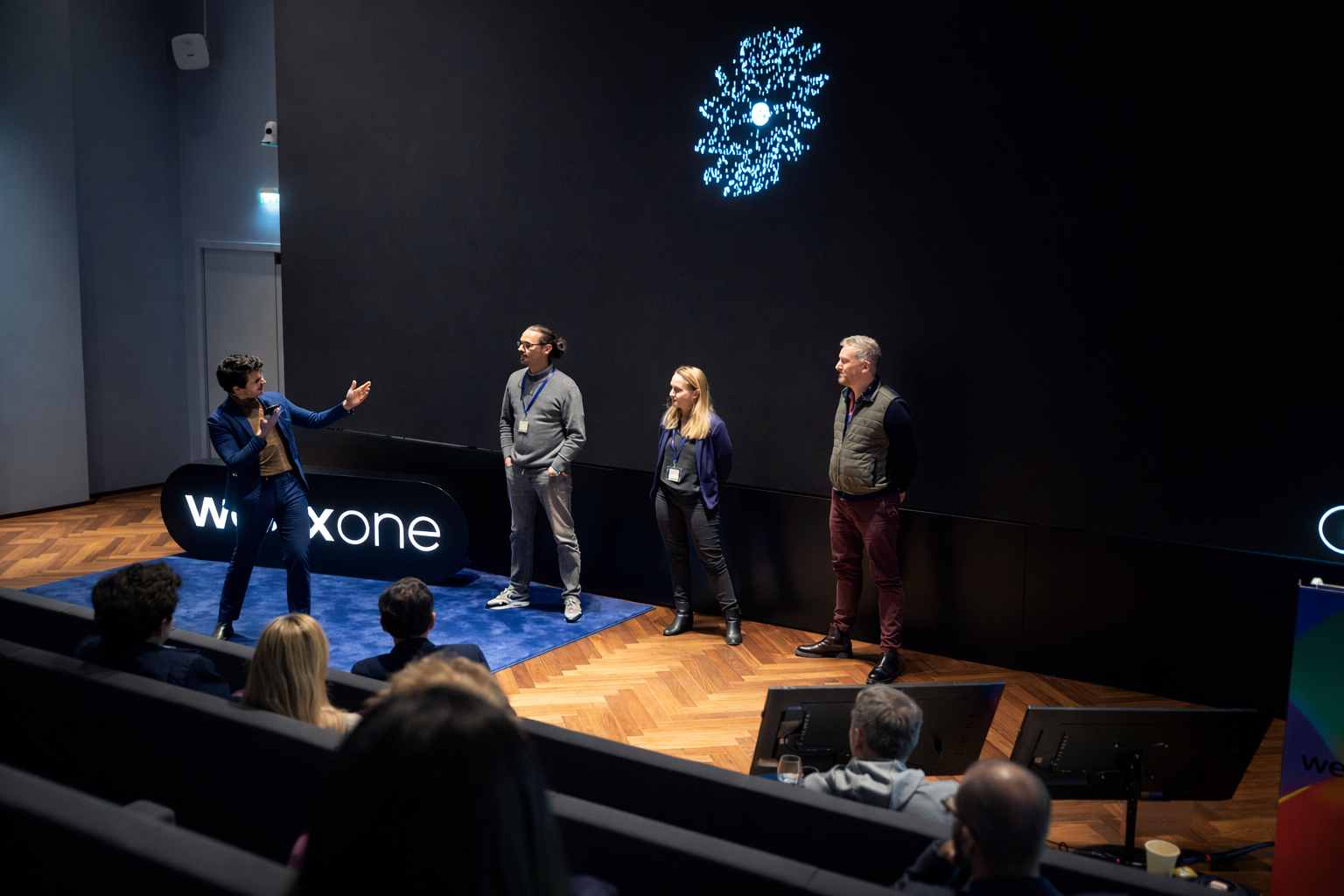
Imagine this: a spectator thinks of a personal memory. No one else in the room knows it. An AI system, through a series of seemingly impossible interactions, reveals details about that memory. Or picture an AI making a prediction, sealed before the show, that matches a choice a spectator makes freely, live, in front of hundreds of witnesses.
These are not hypothetical scenarios. These are effects I perform. The key is that the AI itself becomes a source of mystery. Audiences already have a complicated relationship with AI. They’re fascinated by it, a little intimidated by it, and not entirely sure what it can and can’t do. That ambiguity is a magician’s best friend. When spectators can’t tell where the AI’s real capabilities end and the magic begins, you create an experience that is genuinely unforgettable.
2. AI-Enhanced Mentalism and Mind Reading
Mentalism has always been about simulating impossible knowledge. AI supercharges this. Natural language processing, sentiment analysis, and pattern recognition can all be woven into a mentalist’s toolkit. David Kwong demonstrated this principle on the TED stage by using ChatGPT to apparently read a volunteer’s mind through a series of deductions. In my own work, I integrate AI systems that can process inputs from spectators and generate outputs that feel like genuine telepathy.
The crucial distinction is that the AI should amplify the human performer, never replace them. The emotional core of mentalism, the eye contact, the tension, the moment of revelation, must come from a human being. AI provides an extraordinary new canvas, but the artist still holds the brush.

3. AI as a Creative Engine (Behind the Scenes)
Many magicians are already using AI tools for scripting, brainstorming, and method development. Large language models can generate hundreds of presentational angles for a single effect. Image generation tools can visualise stage designs. AI can even help analyse audience footage to identify which moments generated the strongest reactions.
I’ll be honest: I personally keep my creative process 100% human. My background in cognitive science means I enjoy the puzzle of designing an effect from scratch, and I believe the idiosyncrasies of human creativity, the unexpected connections and emotional intuitions, produce results that AI can’t fully replicate. But I recognise that this is a personal choice, not a universal prescription. For many performers, AI-assisted creativity is a powerful accelerator.
4. Personalised and Interactive Experiences
AI makes hyper-personalisation possible in ways that were unimaginable a few years ago. Predictive algorithms can analyse a crowd’s reactions in real time and help a performer adjust their pacing, select the right moment for a climax, or tailor an effect to a specific audience member. In corporate events, AI can incorporate company logos, branding, and even internal data into magical moments, creating bespoke entertainment that feels custom-built for each client.
Eventbrite’s research shows that audiences increasingly crave active participation over passive watching. AI magic is inherently participatory. The spectator interacts with the technology, makes choices, provides inputs. This makes AI magic a perfect fit for the direction live entertainment is heading.
5. New Impossible Effects
Perhaps most importantly, AI enables effects that simply weren’t possible before. When I started as a magician, certain types of predictions, certain kinds of information revelation, certain feats of apparent omniscience were beyond our reach. AI has made them achievable. I can now create moments where an audience collectively experiences something they know shouldn’t be possible, not through sleight of hand, not through hidden assistants, but through the seamless integration of artificial intelligence into a performance designed around human psychology.
People are still not tired of card tricks. But bring an AI into a card trick, and they will feel something deeper. They’ll remember something special.
The Debate: Will AI Replace Magicians?
Let me address this directly, because it’s the question I get asked most.
No. AI will not replace magicians. And I say this not out of wishful thinking but out of a deep understanding of both AI’s capabilities and magic’s essence.
Here’s why. Magic is not primarily about the trick. It’s about the human connection. The eye contact. The playful teasing. The way a performer reads a room and adapts in real time. The shared vulnerability between performer and spectator when something impossible happens and both of them feel it. As fellow magician Alan Hudson put it, an AI might be clever, but it can’t improvise when a heckler shouts out. It can’t feel the hush before the reveal. That’s the human dimension, and it’s irreplaceable.
David Kwong makes a similar point. He concluded his TED Talk with a powerful reminder that regardless of our technological advances, human beings possess a unique capacity for wonder, one that no machine can simulate. Technology doesn’t diminish wonder; it creates new opportunities for it. But someone still needs to be standing on stage, channelling that wonder into a shared experience.
What AI will do is create a new category within magic. Just as close-up magic, stage magic, and street magic are distinct genres, AI magic is emerging as its own discipline, one that requires not just traditional magical skills but also an understanding of technology, data, and human-computer interaction. The magicians who thrive will be those who learn to work with AI, not those who pretend it doesn’t exist.
The Rise of the AI Magician: A New Archetype
We’re witnessing the emergence of a new kind of performer. The AI magician sits at the crossroads of art, science, and technology: someone who can code a neural network and perform a flawless card routine, someone who understands both how machine learning models process language and how human beings process wonder.
The archetype is already taking shape. On America’s Got Talent Season 20, the masked performer Mastermind (self-described as an AI Wizard) advanced through auditions, quarterfinals, and into the live semifinals by combining magic with technology in ways the judges described as unprecedented. In the corporate world, demand for AI-themed entertainment has surged as companies host events around digital transformation, innovation summits, and product launches.
My own path embodies this convergence. My Master’s in Cognitive Science from ENS Ulm gave me the foundation to understand both the human mind and the machine mind. My experience as an AI engineer means I don’t just use AI tools, I build them. And my years as a professional mentalist give me the performance skills to make the technology disappear into the magic. The result is a show that can be fully customised: incorporating elements like company logos that transition from the real world into AI, live demonstrations of apparent machine telepathy, and interactive experiences that leave audiences questioning the boundary between what is real and what is generated.
What the Future Holds: My Predictions for AI and Magic
Based on what I’m seeing, building, and performing, here is where I believe the intersection of AI and magic is heading.
Hybrid Performances Will Become Standard
Within five years, incorporating some form of AI or machine learning into a magic act will be as common as using a wireless microphone. It won’t replace traditional skills. It will augment them. The magician of 2030 will be as comfortable with an API as with a deck of cards.
AI Will Make Live Magic More Valuable
Paradoxically, as AI-generated content floods digital platforms, the premium on live, in-person, unrepeatable experiences will increase. Audiences will crave the authenticity of a real human doing something impossible right in front of them. The immersive entertainment market is already projected to reach $473.9 billion by 2030, growing at 23.5% annually.
New Ethical Questions Will Emerge
When AI can analyse a spectator’s social media presence, predict their preferences, and tailor effects accordingly, we’ll need clear ethical guidelines. Transparency about the role of technology in performance, without destroying the magic, will become an important conversation in the magic community.
The Magic Community Will Adapt (As It Always Has)
Magic has survived every technological disruption for over five millennia. It survived the printing press (which could have exposed every secret), cinema (which could have replaced live shows), television (which could have saturated the market), and the internet (which made method exposure trivially easy). Each time, magic adapted, evolved, and found new ways to astonish. AI will be no different.
Conclusion: The Magic Is Just Beginning
Arthur C. Clarke’s third law tells us that sufficiently advanced technology is indistinguishable from magic. But here’s the corollary that matters for us: when a magician wields that technology with intention, craft, and showmanship, the result is something greater than either technology or magic alone.
AI is not the enemy of magic. It is the newest chapter in a story that stretches back to the dawn of human civilisation. From the priest-magicians of ancient Egypt to Robert-Houdin’s electromagnetic chest in Algeria, from Méliès’s cinematic illusions to David Kwong’s ChatGPT mind-reading on the TED stage, the message is consistent: magic doesn’t run from technology. Magic runs toward it.
I’ve been performing as an AI magician since 2024, and every week I discover something new that AI makes possible. Something that makes an audience gasp, laugh, or sit in stunned silence. Something that makes them feel that ancient, primal emotion: wonder.
The future of magic isn’t threatened by artificial intelligence.
The future of magic is artificial intelligence.
And the magic is just beginning.
Planning a business event? Explore the AI magic show, the interactive AI keynote or the virtual magic show for remote teams. You can also compare the formats available for corporate magic and mentalism.
Sources and Further Reading
Clarke, Arthur C. Profiles of the Future: An Inquiry into the Limits of the Possible (1962). Clarke’s Third Law.
Kwong, David. “Magic and Wonder in the Age of AI.” TED Talk, TED@BCG, Paris (2024).
Thomas, Matthew Gwynfryn & Veldhuis, Djuke. “Is Artificial Intelligence Magic?” SAPIENS (2019).
Smith, Wally. “Technologies of Stage Magic: Simulation and Dissimulation.” Social Studies of Science (2015).
Kentley Insights. “Carnivals, Circuses and Magic Shows Industry Market Research Report” (2025).
WiseGuy Reports. “Magic Performance Market: A Comprehensive Analysis 2032” (2024).
Eventbrite. “Social Study: Live Experience Trends and the Future of Gathering” (2026).
Eventbrite & Harris Poll. “Millennials: Fueling the Experience Economy” (2014).
ResearchAndMarkets. “Immersive Entertainment: Global Strategic Business Report 2024–2030” (2025).
Robert-Houdin, Jean-Eugène. Confidences d’un Prestidigitateur (1858).
Britannica. “Jean-Eugène Robert-Houdin: Illusionist, Inventor, Showman.”
NBC. “See AGT’s Unexplainable AI Live Magic Act: Mastermind” (September 2025).
